
Your Trusted Eyes on The Ground
Sourcing Furniture From Indonesia : Why Sustainable Sourcing and Certifications Matter
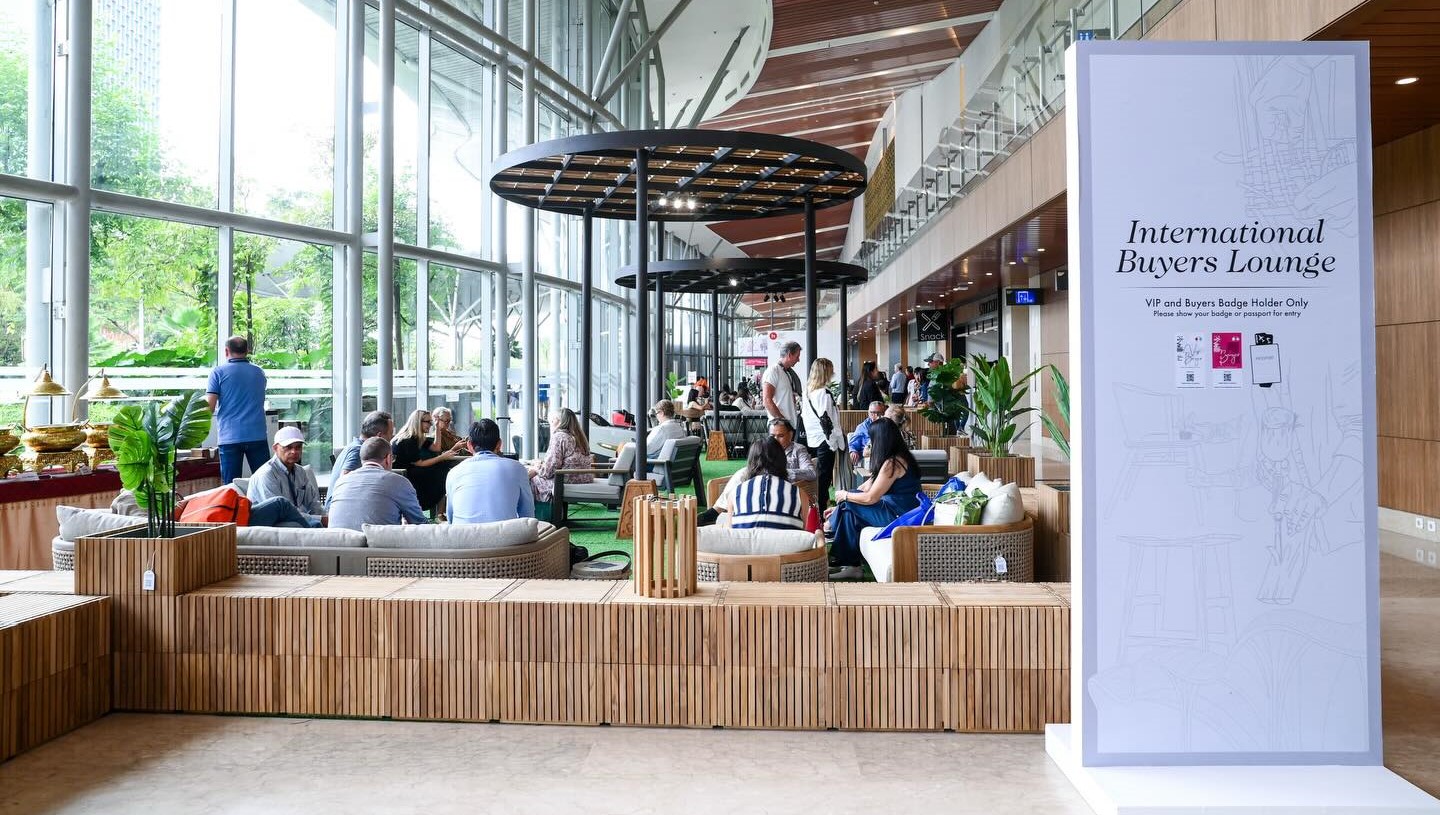
For global importers, sourcing furniture made of solid wood, particularly premium teak, is an exercise in balancing timeless craftsmanship with strict international compliance. As the global marketplace pivots toward conscious consumption, sustainable sourcing has become the defining metric for success. Today, buyers expect more than just aesthetic appeal; they demand verified transparency, accountability, and environmental ethics. For international brands operating in a crowded marketplace, embracing sustainable sourcing is no longer just an optional corporate value; it is a critical business strategy that protects your brand reputation and secures long-term market access.
Indonesia offers several advantages for international furniture buyers. The country has a long-established woodworking and furniture manufacturing industry, supported by skilled craftsmen and manufacturers experienced in producing furniture for international markets. However, supplier capabilities can vary significantly. This makes proper supplier evaluation an important part of the sourcing decisions.
Sustainability is increasingly becoming an important consideration when selecting furniture suppliers. For buyers, sustainable sourcing can involve several areas:
- Legally sourced timber
- Responsible material selection
- Traceability
- Resource efficiency
- Waste management
- Responsible manufacturing practices
- Worker welfare
- Appropriate environmental controls
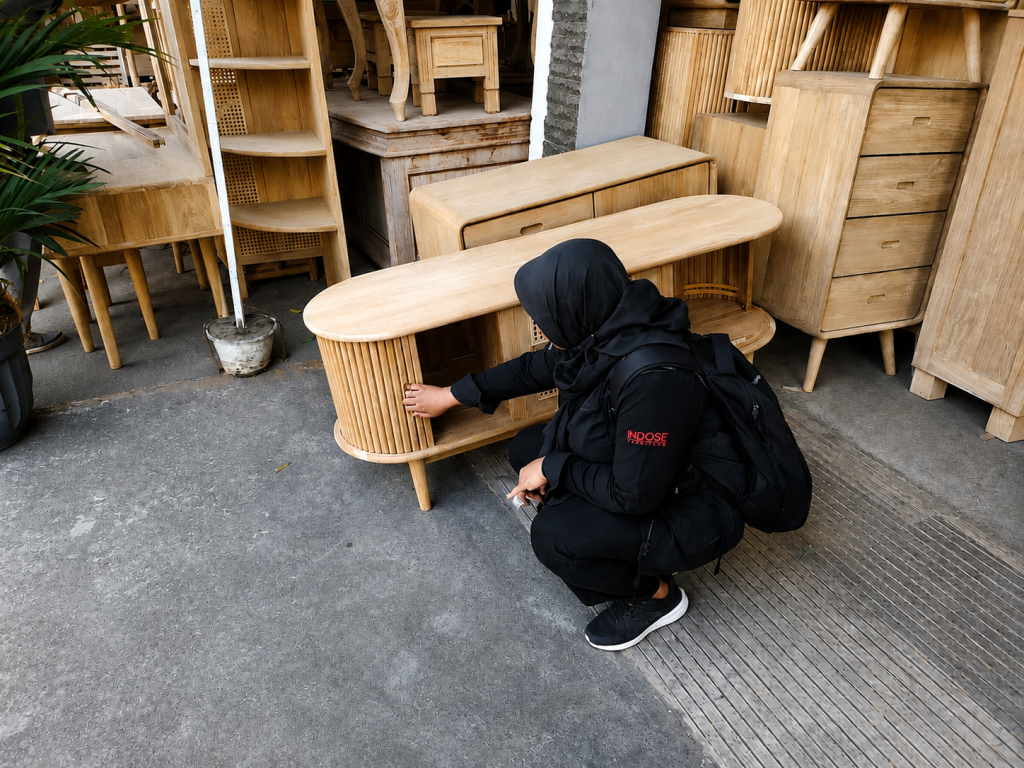
Rather than relying on a single certification, buyers should evaluate sustainability as part of the supplier’s overall manufacturing and supply chain practices. This approach provides a more complete picture of how furniture is produced. A practical evaluation process can include:
Factory Assessment → Sample Development → Specification Review → Production Monitoring → Quality Inspection → Shipment
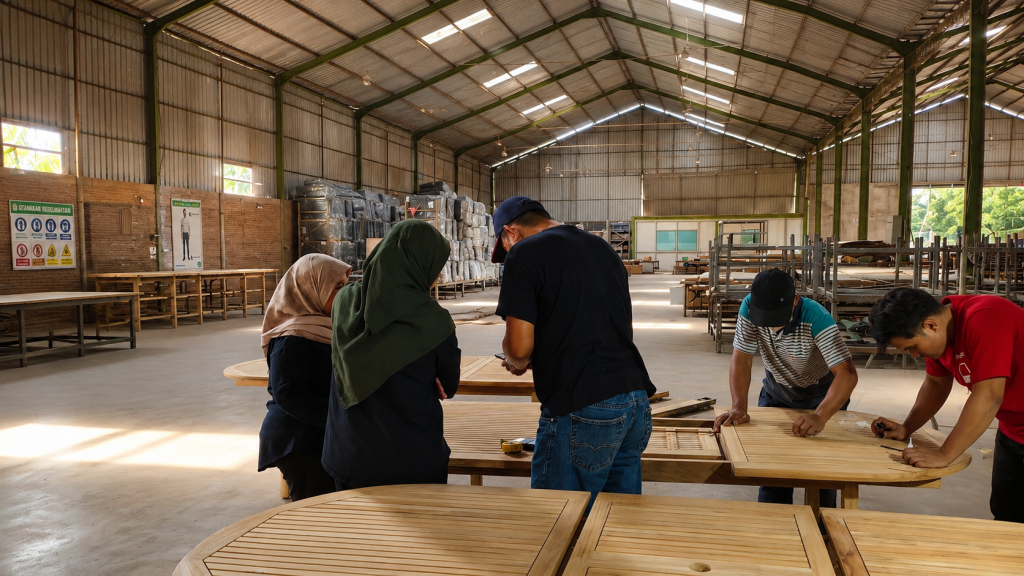
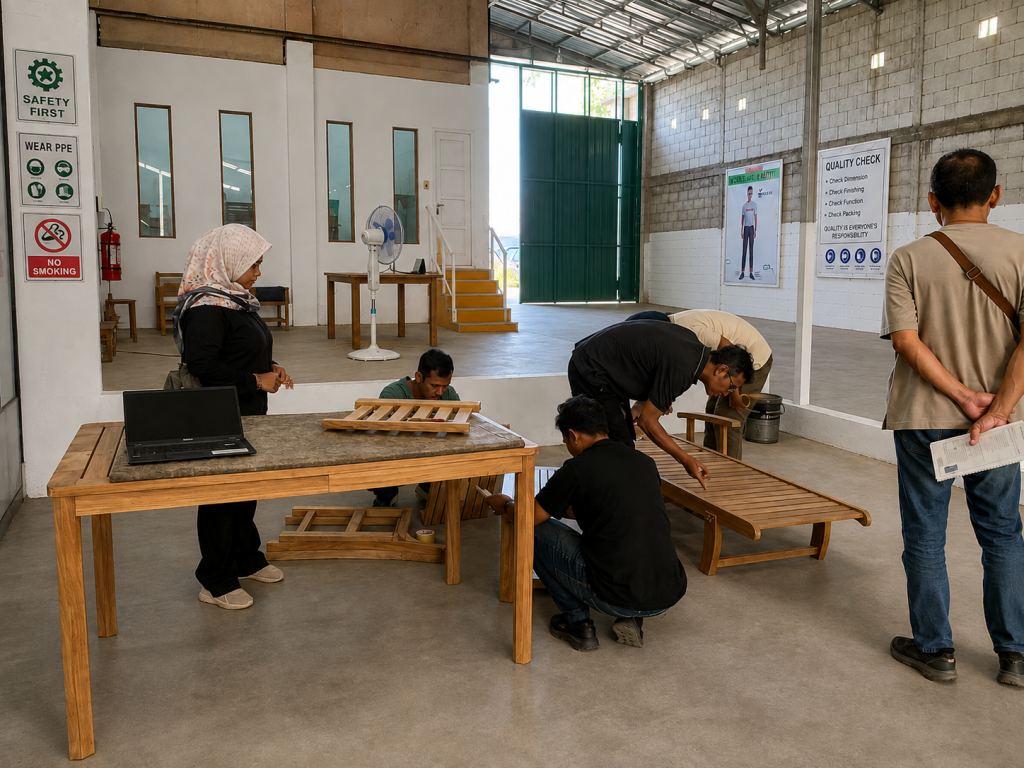
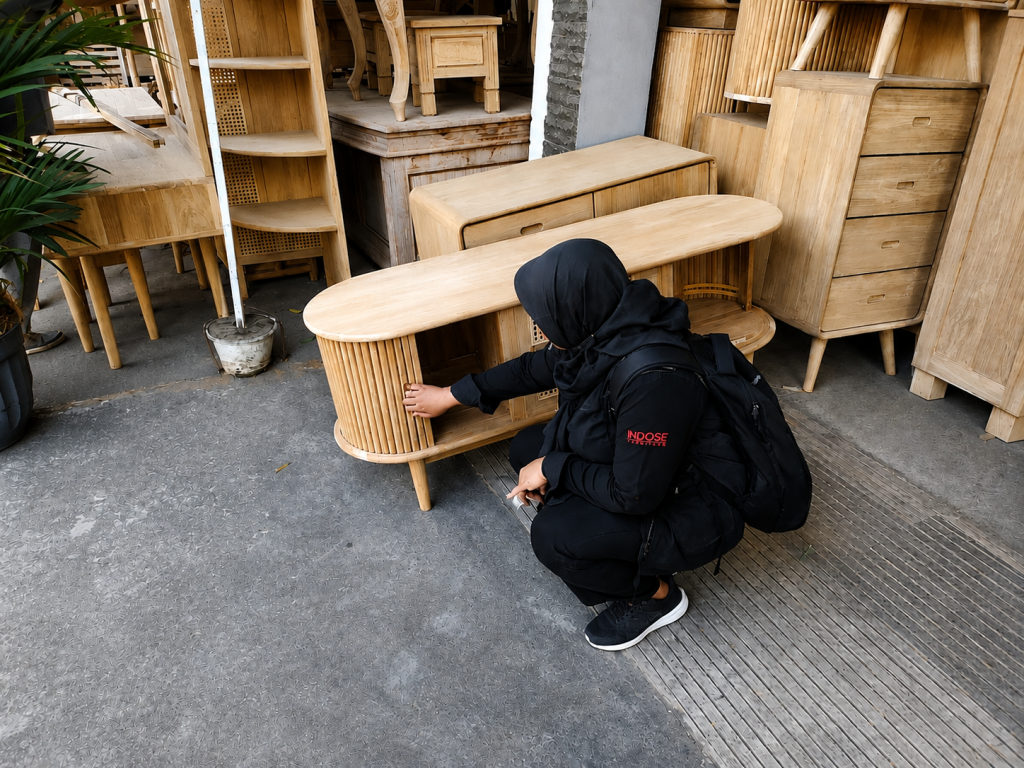
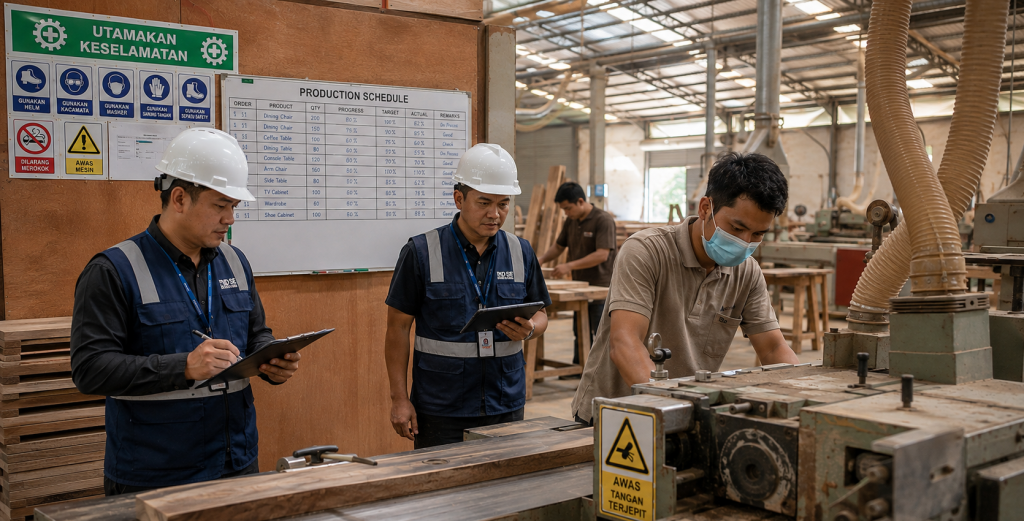
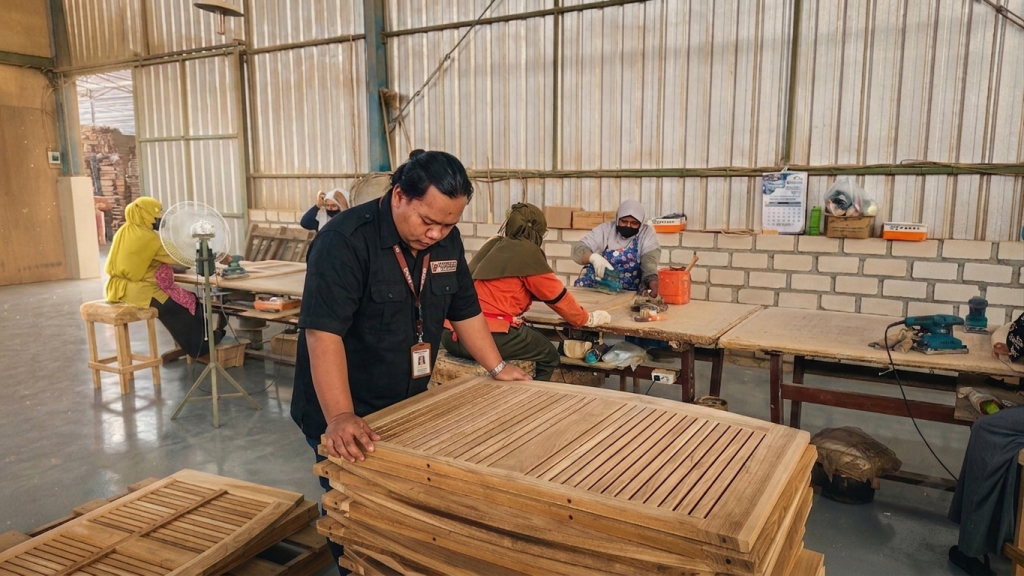

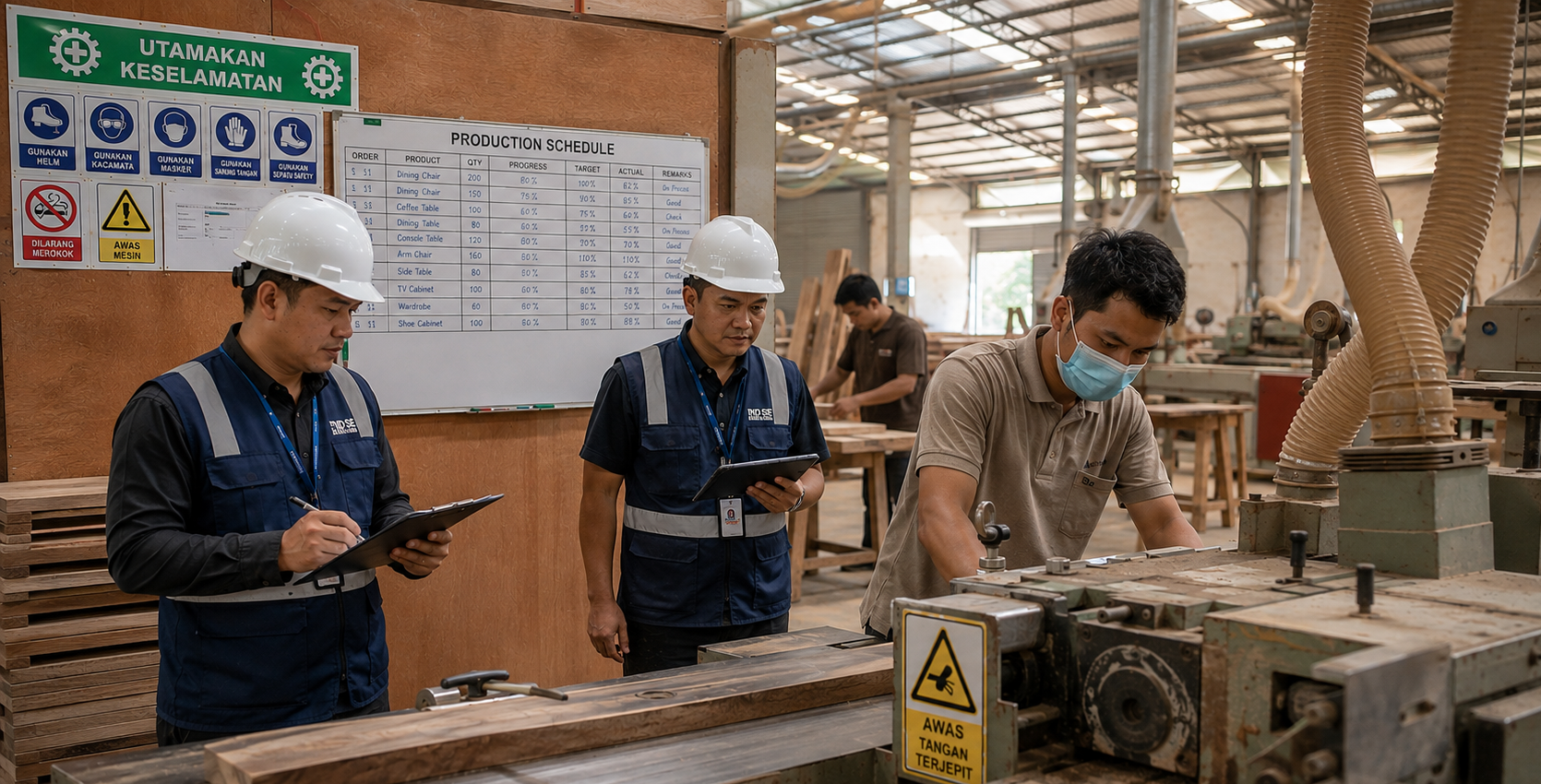
A factory assessment can help verify the supplier’s actual facilities, workforce, machinery, production capabilities, and quality control system. Sample development then allows buyers to evaluate product construction, dimensions, materials, finishing, and functionality before moving into mass production. During production, regular monitoring and quality inspections provide additional checkpoints to identify potential issues before shipment.
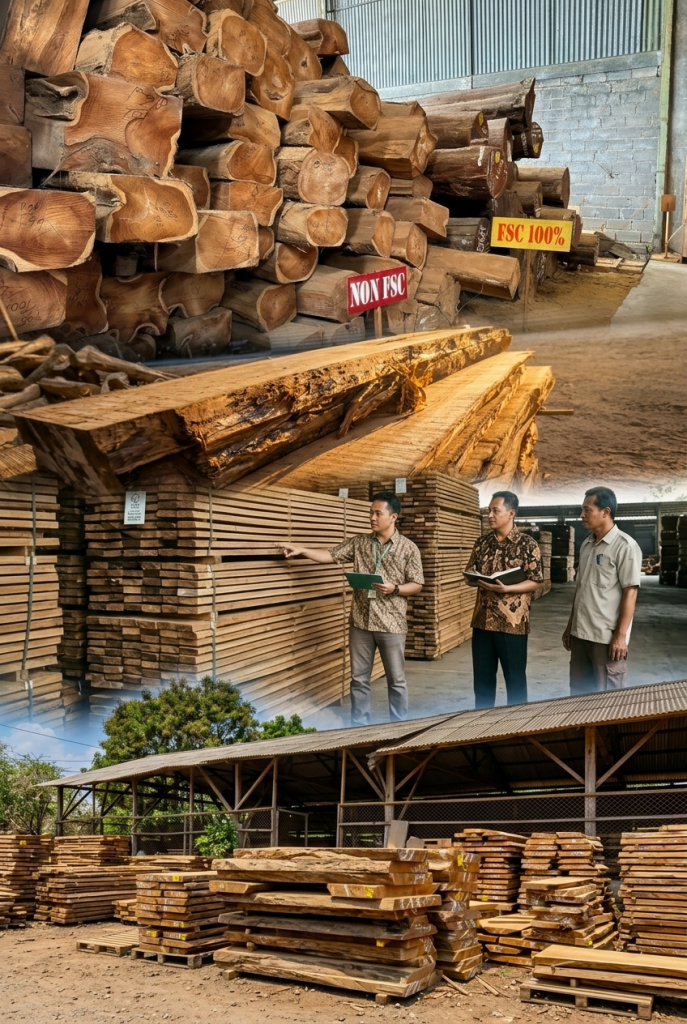
Timber Legality and SVLK Standard
When sourcing furniture crafted from teak or other solid woods, legality is non-negotiable. Indonesia’s Timber Legality Assurance System (TLAS), known locally as SVLK, acts as the backbone of sustainable sourcing for the forestry industry. It ensures that all wood-based products and raw materials originate from authorized, legally managed forests.
What makes SVLK essential for global buyers, particularly those importing solid wood into regulated Western markets, is its complete traceability from upstream forestry to downstream processing. By requiring regular factory audits and verified export documentation, SVLK provides undeniable proof that the teak or solid wood is legally sourced and compliant with international environmental laws, such as the U.S. Lacey Act. If your business model relies on sourcing furniture that appeals to eco-conscious consumers in the US or EU, SVLK certification is your primary proof of legitimacy. It transforms a complex regulatory hurdle into a verifiable competitive advantage, assuring your customers that your beautiful teak tables were harvested with respect for the land.
Ethical Manufacturing and BSCI Compliance
However, environmental care is only one half of the sustainable sourcing puzzle. True ethical procurement goes deeper into the factory floor to address the human element of production. When evaluating factory partners specializing in solid wood cabinetry or furniture, global buyers must prioritize labor standards, workplace safety, and fair treatment.
This is where frameworks like amfori BSCI (Business Social Compliance Initiative) play a vital role. Aligned with international conventions, amfori BSCI helps manufacturers identify, assess, and mitigate social risks across their facilities. It covers crucial areas such as fair remuneration, standard working hours, occupational health and safety, and the absolute prohibition of forced or underage labor. For companies committed to ethical sourcing furniture practices, BSCI compliance removes the guesswork from vendor selection. By working with solid wood manufacturers that adhere to these standards, importers can guarantee that their goods are crafted in environments that respect human dignity.
Material Safety and Oeko – Tex Standard
Beyond raw timber and factory labor, finished pieces often demand strict attention to material safety. While your focus may be on solid teak or other hardwoods, many items require protective finishes, varnishes, or, in the case of seating, upholstered cushions. Consumers today expect living spaces that are free from harmful chemicals, heavy metals, or toxic finishes.
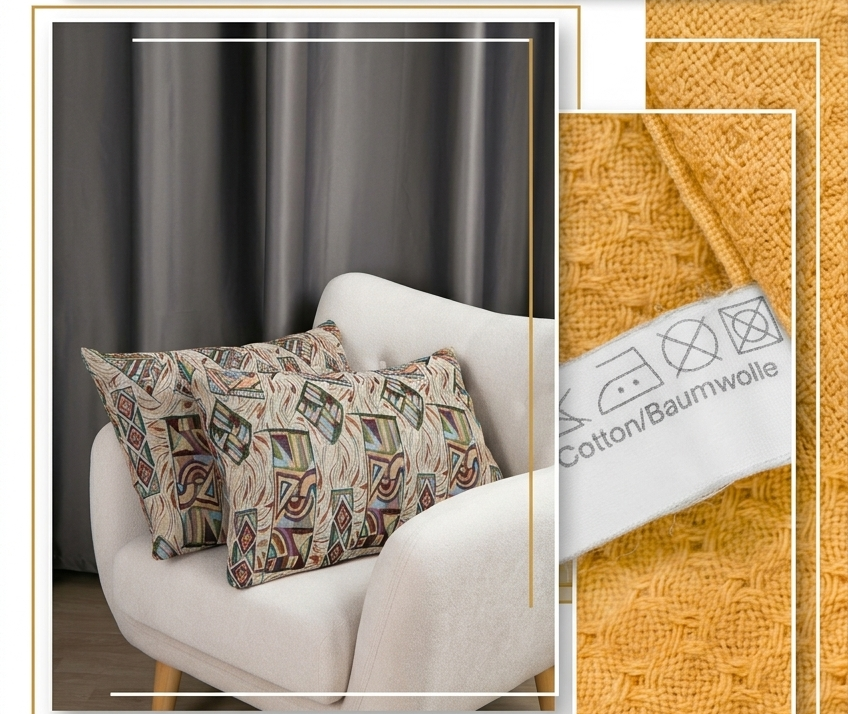
This is where third-party textile certifications like Oeko-Tex become invaluable when reviewing product specifications. Sustainable sourcing extends to every aspect of the item. Oeko-Tex standards test for harmful substances across every stage of textile and foam production, ensuring that the fabrics touching your customers’ skin are safe and eco-friendly. Integrating these material-level safety checks into your supply chain bridges the gap between raw manufacturing and consumer-ready quality. It adds a layer of consumer trust that is essential when sourcing furniture intended for high-end residential or commercial living spaces.
Navigating international procurement does not have to feel like a guessing game. By prioritizing certified solid wood through SVLK, upholding worker welfare through BSCI, and verifying material safety with standards like Oeko-Tex, global brands can build a resilient supply chain. Ultimately, the future of the industry lies in transparency. By integrating these certifications into your operations, you transform the process of sourcing furniture into a reliable, ethical, and competitive endeavor. Embracing sustainable sourcing is not just about meeting compliance requirements; it is about building a brand that stands for quality, integrity, and enduring value.
However, navigating these complexities, from vetting factories to monitoring production, requires on-the-ground expertise. This is where INDOSE provides comprehensive sourcing and quality control solutions for international furniture buyers. Our team offers a full suite of services, including expert supplier sourcing, factory assessments, rigorous quality inspections, production monitoring, and seamless export coordination. With extensive experience in the Indonesian manufacturing sector, we help buyers build reliable supply chains, improve supplier relationship management, and achieve consistent product quality across every order.
If you are looking for trusted furniture sourcing support in Indonesia, we are ready to assist.
Let us help you turn your vision into a reality built on quality, compliance, and trust.
Contact INDOSE today to discuss your specific sourcing requirements and discover how we can help you find reliable suppliers, elevate your quality control, and simplify your export process.

Let's Connect!
- Semarang, Indonesia
- sales@indose.net
- +62 813-2897-893
Copyright © 2026 INDOSE